

A Tailored Education Begins at Home
Homeschooling opens the door to personalized, flexible education that traditional school systems can’t always provide. However, the idea of building a structured curriculum from scratch can feel daunting at first.
But here’s the truth:
✅ You don’t have to be an expert
✅ You don’t need endless hours
✅ You only need a solid plan—and a heart ready to lead
This guide will walk you through 8 practical steps to build a curriculum that suits your child’s strengths, interests, and your family’s values.
Step 1: Understand Your Child’s Learning Style
Every child learns differently. Recognizing how your child learns best is the cornerstone of an effective homeschool plan.
-
Visual learners prefer charts, images, and diagrams
-
Auditory learners retain information through discussions or music
-
Kinesthetic learners thrive on hands-on experiences and movement
🧠 Tip: Try incorporating a mix of styles during your first few weeks to discover what clicks.
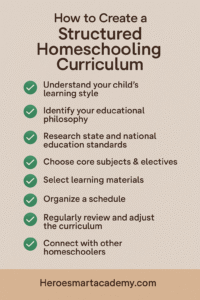
Step 2: Choose an Educational Philosophy
Your teaching philosophy acts as a compass to guide your curriculum choices.
Popular approaches include:
-
Classical education (logic, grammar, and rhetoric-based)
-
Montessori (hands-on and student-led)
-
Charlotte Mason (living books, nature study, short lessons)
-
Unit Studies (thematic cross-subject exploration)
-
Unschooling (child-led curiosity)
You don’t have to pick just one. Many families choose a hybrid approach based on what works best for their child.
👉 Enroll now at HeroesMart Academy to explore a structured Christian education model that’s flexible and engaging.
Step 3: Know Your State’s Educational Requirements
Homeschooling laws vary by location. Before creating your curriculum, check your state’s:
-
Required subjects
-
Attendance expectations
-
Assessment or testing mandates
-
Portfolio guidelines (if applicable)
📍 Visit HSLDA’s Legal Map to find your state’s requirements.
A structured curriculum aligned with these standards ensures compliance and peace of mind.
Step 4: Choose Core Subjects and Electives
Most structured homeschool programs include:
-
Math
-
Language Arts (reading, writing, spelling, grammar)
-
Science
-
Social Studies / History
-
Bible
Electives bring balance and joy:
-
Art, music, foreign languages
-
Typing, coding, entrepreneurship
-
Health, cooking, or financial literacy
🎯 Let your child’s passions lead the way when choosing electives.
👉 Explore Godly Learners Workbooks on Amazon to discover subject-based, character-building curriculum you can start using today.
Step 5: Choose Learning Materials
Once you’ve chosen your subjects, it’s time to gather your tools.
Some options include:
-
Textbooks and printable workbooks
-
Interactive online platforms (like Khan Academy)
-
Homeschool bundles (complete curriculum kits)
-
Literature, documentaries, podcasts, and field trips
🧺 Don’t forget faith-based resources!
👉 Download the FREE Ultimate Character Development Workbook to guide biblical growth in daily learning.
Step 6: Create a Flexible, Faith-Filled Schedule
Structure helps your child stay on track—but homeschooling is not about recreating a rigid classroom.
Build a daily rhythm like this:
| Time | Activity |
|---|---|
| 8:30 AM | Morning Devotion & Prayer |
| 9:00 AM | Language Arts |
| 10:00 AM | Math |
| 11:00 AM | Snack + Bible Study |
| 11:30 AM | Science / Social Studies |
| 12:30 PM | Lunch |
| 1:30 PM | Elective or Hands-On Project |
| 2:30 PM | Quiet Reading or Reflection |
🔁 Adjust as needed. If your child learns better in the evening—go with that!
Step 7: Review and Revise Regularly
Just because you planned something doesn’t mean it can’t change.
Every 4–6 weeks:
-
Check if the pace is too fast or too slow
-
Swap out ineffective materials
-
Celebrate small wins
-
Introduce new topics based on emerging interests
📝 Reflection time is essential—both for you and your child.
Step 8: Connect with Homeschool Communities
You don’t have to do this alone.
Surround yourself with:
-
Local homeschool co-ops or field trip groups
-
Facebook or online support forums
-
Church-based homeschooling families
-
Podcasts, blogs, or YouTube tutorials
📬 Join our mailing list for weekly homeschool encouragement and new printable resources:
👉 https://mailchi.mp/heroesmart/homeschool-freebie-signup
Final Thoughts: Personalize. Pray. Persevere.
Building a structured homeschooling curriculum may seem like a big task, but it becomes beautifully rewarding when guided by faith, flexibility, and love.
Remember:
-
Start with your child’s learning style
-
Let biblical principles shape your path
-
Keep it simple at first—and grow from there
-
Adjust as you go, and celebrate progress
📘 Homeschooling is not about perfection. It’s about progress with purpose.
Ready to Begin?
Explore the full suite of HeroesMart homeschool tools designed to simplify your journey:
✅ Enroll in HeroesMart Academy
✅ Bible-Based Workbooks on Amazon
✅ FREE Ultimate Character Workbook
✅ Curriculum Videos on YouTube
🙌 – Mrs. Nita | HeroesMart Academy

Mrs. Nita is co-founder of HeroesMart Academy, co-creator of Godly Learners curriculum and lead instructor at https://www.youtube.com/@HeroesMartHomeschoolAcademy. When she’s not building homeschool content, you can find her enjoying time with her husband and four little ones.