

Why Structure Matters in Homeschooling
When parents first step into homeschooling, the excitement is often mixed with an overwhelming question:
“How do I build a homeschool curriculum that’s structured—but not stifling?”
The truth is—crafting a homeschool plan that reflects your child’s learning style, your family’s values, and your state’s requirements is not only possible—it’s deeply rewarding.
In this guide, you’ll learn how to:
-
Identify your child’s learning style
-
Choose the best educational philosophy for your family
-
Create a subject plan and learning rhythm
-
Incorporate biblical values and social growth
-
Stay compliant with laws—without losing your flexibility
Bonus: This blog is designed to help you get a structured homeschool curriculum in place within 2 weeks.
Step 1: Understand Your Child’s Learning Style
The first key to success? Know how your child learns best.
-
Visual learners thrive on diagrams, charts, and colorful visuals.
-
Auditory learners grasp concepts better when they hear them.
-
Kinesthetic learners learn through movement and hands-on activities.
🟡 Tip: Observe your child in play, conversation, and learning. How do they naturally respond to new information?
📥 Free Tool: Use a free online quiz like the VARK Questionnaire to gain clarity.
🎯 Once you identify their learning style, you can select curriculum tools and teaching strategies that resonate deeply—cutting frustration and boosting motivation.
Step 2: Choose Your Educational Philosophy
Your homeschool philosophy acts like a compass. It guides your curriculum, your daily rhythm, and how you define “success.”
Here are some popular options:
| Philosophy | What It’s Known For |
|---|---|
| Classical | Logic, grammar, and rhetoric-based stages |
| Montessori | Child-led, hands-on exploration |
| Unschooling | Interest-driven, flexible learning |
| Charlotte Mason | Living books, nature study, narration |
| Eclectic | A thoughtful mix of multiple styles |
📖 If you’re a faith-based family, you may also consider biblical curriculum models that integrate Scripture into every subject.
👉 Enroll in HeroesMart Academy to experience our proven Christian framework.
Step 3: Outline Core Subjects and Goals
Creating a subject map helps ensure you’re providing a well-rounded education.
Most families include:
-
Bible / Devotions
-
Reading & Literature
-
Writing / Language Arts
-
Math
-
Science
-
History / Social Studies
-
Life Skills
-
Character Development
💡 Don’t forget electives like:
-
Art
-
Music
-
Foreign language
-
Computer skills
🎯 Set SMART goals:
-
Short-term (weekly reading goals, multiplication facts mastery)
-
Long-term (prepare for standardized testing, memorizing a Psalm, learning cursive)
📝 Write them out and post them somewhere visible!
Step 4: Know Your Local Homeschool Laws
Homeschooling laws vary by state and country. Some common requirements include:
-
Keeping attendance logs
-
Submitting a letter of intent
-
Annual assessments or standardized tests
-
Teaching mandated subjects
📍Use HSLDA’s State Laws Map to check your local guidelines.
Remember: compliance is not complicated when you know what’s expected. Keeping records and portfolios is easier with a structured plan in place.
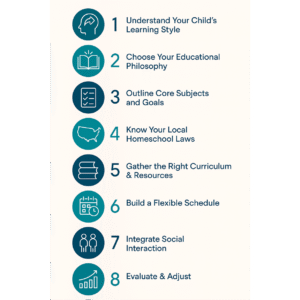
Step 5: Gather the Right Curriculum & Resources
Now that you’ve got your framework—it’s time to pick your tools.
Mix and match the following:
-
📚 Textbooks (e.g., Master Books, Abeka, The Good and the Beautiful)
-
🎧 Podcasts or Audiobooks (great for auditory learners)
-
💻 Online Courses (like Khan Academy, HeroesMart’s YouTube channel)
-
🎲 Hands-On Materials (science kits, games, maps, flashcards)
-
📱 Apps like Duolingo, Prodigy, or Bible Memory
🟢 Pro Tip: Start with 1-2 subjects and build from there. You don’t need a 100% completed curriculum on day one.
👉 Explore FREE full curriculum learning videos for Pre-K to 5 on our YouTube channel »
Step 6: Build a Flexible Schedule
Structure is important—but so is grace.
Design a daily or weekly routine that works for your lifestyle:
| Time | Activity |
|---|---|
| 8:30 AM | Morning devotions & calendar time |
| 9:00 AM | Reading & writing |
| 10:15 AM | Snack + movement break |
| 10:45 AM | Math |
| 11:30 AM | Science or history |
| 12:30 PM | Lunch & free play |
| 2:00 PM | Art, music, or project work |
🔁 Revisit and tweak your schedule monthly based on what’s working—and what’s not.
Step 7: Integrate Social Interaction
Contrary to popular myths, homeschoolers aren’t destined to be lonely.
👫 Include structured social growth:
-
Join a local co-op
-
Sign up for sports, art class, or church groups
-
Attend field trips with other families
-
Volunteer at food pantries or shelters
-
Host “presentation days” where kids share projects
🎭 Social learning builds confidence, resilience, and empathy.
Step 8: Evaluate & Adjust
Don’t skip regular check-ins. Every few weeks, assess:
-
What goals are being met?
-
Are we staying on track spiritually and academically?
-
What subjects spark joy? What causes resistance?
📊 Use tools like:
-
Rubrics
-
Self-assessments
-
Portfolio reviews
-
Project-based evaluations
🟨 Remember, evaluation is not about judgment—it’s about growth and guidance.
Step 9: Tap into Community and Mentorship
You don’t have to do this alone.
Seek out:
-
Homeschool support groups (online and local)
-
Mentorship from seasoned homeschool moms
-
Workshops, conventions, or webinars
📬 Join our mailing list for weekly encouragement and FREEBIES
👉 https://mailchi.mp/heroesmart/homeschool-freebie-signup
Whether you’re facing burnout, curriculum overwhelm, or self-doubt—community can help you press forward with renewed vision.
Step 10: Practice Patience & Grace
Homeschooling is not a sprint—it’s a lifelong journey.
There will be:
-
Tears over tough math
-
Joy in sudden breakthroughs
-
Days where everything flows
-
Days when nothing goes right
💖 In all of it, keep your eyes on what matters most: discipling your child and fostering a love for learning.
Bonus Resource: Character-Based Curriculum That Works
🌟 Ready to reinforce biblical values as part of your homeschool day?
📘 Grab the FREE Ultimate Character Development Workbook for Kids (Ages 6–12)
👉 Download here
This printable includes:
-
Bible verse reflections
-
Fun challenges
-
Daily checklists
-
Coloring pages featuring our lion mascot!
Final Thoughts: Build, Tweak, Trust God
A structured homeschool curriculum doesn’t need to be rigid or intimidating. When built prayerfully, it becomes a living, growing journey tailored to your family.
Trust the process.
Trust your calling.
And most importantly—trust the Lord to guide every step.
👉 Ready to enroll in a structured, Christ-centered program? Join HeroesMart Academy »
🙌 – Mrs. Nita | HeroesMart Academy

Mrs. Nita is co-founder of HeroesMart Academy, co-creator of Godly Learners curriculum and lead instructor at https://www.youtube.com/@HeroesMartHomeschoolAcademy. When she’s not building homeschool content, you can find her enjoying time with her husband and four little ones.