
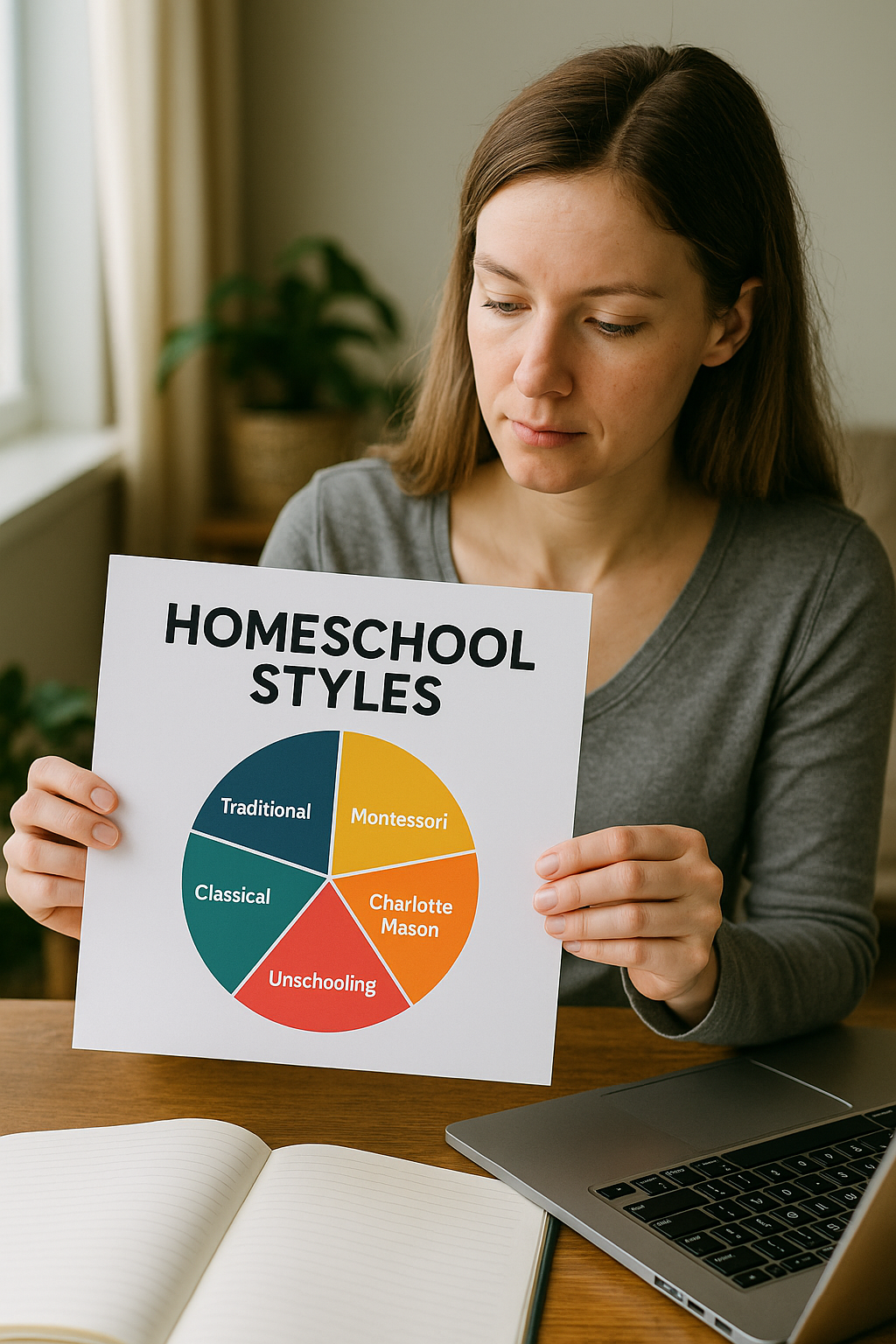
Homeschooling Isn’t One-Size-Fits-All
With so many parents embracing home education, a common question arises:
Which homeschooling style is right for my family?
The truth is, homeschooling offers more than just flexibility in schedule—it offers diverse educational approaches designed to meet your child’s unique needs. In this guide, we’ll explore five of the most popular homeschool styles so you can make an informed, confident decision.
Whether you’re looking for structure, creativity, independence, or a classical foundation—there’s a method for you.
👉 Visit our YouTube channel for free Pre-K to Grade 5 curriculum content »
1. Traditional Homeschooling (School-at-Home)
This method mirrors public or private school—but at home.
🔹 Key Features:
-
Uses structured schedules
-
Includes textbooks and worksheets
-
Mimics classroom routines and subjects
Traditional homeschooling is ideal for parents new to homeschooling or transitioning children from public school. It provides a clear framework, which helps build early confidence.
However, this method may feel rigid for some families. It often lacks the flexibility and creativity found in other styles.
2. Montessori Homeschooling
Rooted in the work of Dr. Maria Montessori, this child-centered approach values hands-on exploration and practical life skills.
🔹 Key Features:
-
Emphasizes sensory learning and independence
-
Uses real-world tools, not just textbooks
-
Children choose learning activities within structure
Montessori homeschooling fosters confidence, creativity, and curiosity. It’s especially great for early learners.
Because it allows students to lead their learning, it helps develop strong internal motivation.
👉 Enroll in HeroesMart Academy to explore Christ-centered learning that respects your child’s pace and interests.
3. Classical Homeschooling
Yes, this is one of the most academically rigorous methods. It teaches students to think deeply using the Trivium: Grammar, Logic, and Rhetoric.
🔹 Key Features:
-
Language and logic-based
-
Includes Latin, philosophy, literature, and debate
-
Follows developmental stages
Students progress from memorizing facts (Grammar stage), to reasoning and analyzing (Logic), to expressing and persuading (Rhetoric).
This method builds powerful thinkers and articulate communicators. However, it demands consistency and strong parental involvement.
🎓 Perfect for families that want a strong academic foundation grounded in tradition.
4. Charlotte Mason Homeschooling
Developed by British educator Charlotte Mason, this method emphasizes a living education through rich literature, nature, and the arts.
🔹 Key Features:
-
Uses “living books” instead of dry textbooks
-
Nature journaling and hands-on science
-
Short lessons to respect attention spans
-
Includes music, poetry, art, and handiwork
This approach treats children as whole persons. It cultivates beauty, reflection, and gentle discipline.
Because it blends academics with wonder, Charlotte Mason appeals to parents seeking well-rounded Christian education grounded in truth and beauty.
👉 Get the FREE Ultimate Character Development Workbook for Kids (Ages 6–12) »
5. Unschooling (Natural Learning)
Unschooling is the most unstructured of all homeschool styles. It believes that children learn best when they pursue their own interests.
🔹 Key Features:
-
No set curriculum or daily schedule
-
Focuses on real-life learning and exploration
-
Students guide their own educational path
This style thrives on trust—in the child’s natural curiosity and ability to learn when given freedom.
Although it seems informal, many unschooled children go on to excel in college or entrepreneurial paths. It’s best suited for self-driven learners and highly involved parents who guide gently from behind the scenes.
Comparison Chart: Which Style Fits Your Family?
| Style | Structure | Creativity | Independence | Faith Integration |
|---|---|---|---|---|
| Traditional | High | Low | Low | Optional |
| Montessori | Moderate | High | High | Possible |
| Classical | High | Moderate | Moderate | Strong |
| Charlotte Mason | Moderate | High | Moderate | Strong |
| Unschooling | Low | High | Very High | Flexible |
How to Choose the Right Homeschooling Style
Every family is different. So, how do you choose?
Consider:
-
Your child’s learning style (Visual? Auditory? Hands-on?)
-
Your family’s schedule and lifestyle
-
Your educational values (Faith-based? Academic rigor? Creativity?)
-
Your comfort with structure or flexibility
🎯 Don’t feel locked into one style! Many parents use a hybrid approach, blending what works best.
📝 Example:
-
Use Classical methods for Language Arts
-
Apply Montessori techniques for Math
-
Include Charlotte Mason nature walks for Science
Encouragement from the Field
“We started with Traditional, but gradually added in Charlotte Mason books and unschooling afternoons. It made a huge difference!”
— Kendra W., homeschool mom of 3
“Montessori helped my daughter regain confidence. Now we mix Classical reading with hands-on projects.”
— Jason T., Texas
Bonus: How Faith Shapes Your Homeschooling Choice
As a Christian family, your values guide every part of your child’s upbringing—including education.
No matter which style you choose, you can:
-
Begin each day with Scripture
-
Include Bible-based lessons and devotions
-
Reinforce godly character
👉 Join our mailing list for weekly encouragement and FREEBIES »
Final Thoughts: Start with One Style—But Stay Flexible
Your homeschool journey doesn’t have to be perfect—it just has to be intentional.
Start by identifying the homeschool style that resonates with your values. Test it for a month. Observe. Adjust.
What matters most is nurturing your child’s mind, heart, and spirit—with patience, grace, and wisdom.
💡 Need more structure and Christian resources?
👉 Enroll now at HeroesMart Academy – Where learning meets faith.
🙌 – Mrs. Nita | HeroesMart Academy

Mrs. Nita is co-founder of HeroesMart Academy, co-creator of Godly Learners curriculum and lead instructor at https://www.youtube.com/@HeroesMartHomeschoolAcademy. When she’s not building homeschool content, you can find her enjoying time with her husband and four little ones.